

Liposuction Is More Than Fat Removal — It Is Body Contouring
Many people believe that liposuction simply removes unwanted fat. In reality, modern liposuction is designed to reshape body contours, improve proportions, and create a more balanced silhouette rather than serve as a weight-loss procedure.
Localized fat deposits may develop due to genetics, hormonal changes, aging, or pregnancy. Even individuals who maintain a healthy diet and exercise regularly may continue to have stubborn fat in areas such as the abdomen, waist, back, upper arms, thighs, or beneath the chin. These deposits often respond poorly to diet and exercise alone.
Modern liposuction selectively removes these resistant fat deposits while preserving smooth, natural body contours. The objective is not to remove the maximum amount of fat, but to achieve balanced proportions that complement the patient’s overall physique.
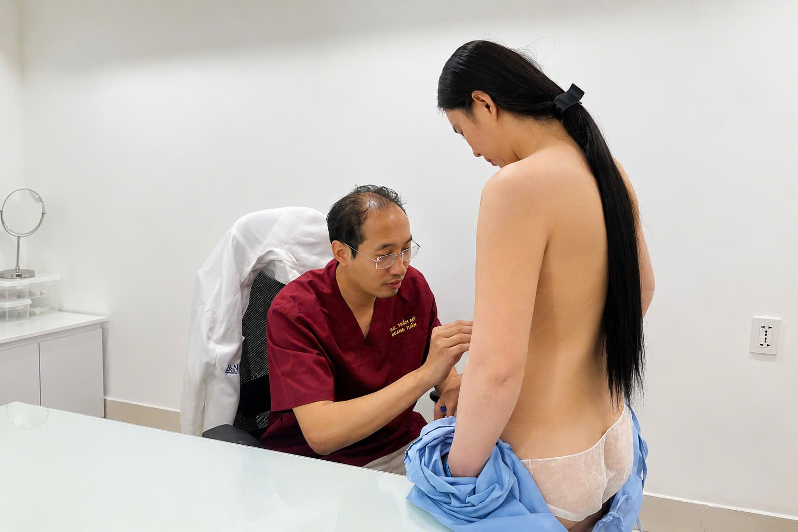
Every treatment begins with a comprehensive evaluation. The surgeon assesses fat distribution, skin quality, tissue elasticity, body proportions, and the patient’s aesthetic goals. These factors help determine which areas should be treated, how much fat can be safely removed, and whether complementary procedures—such as abdominoplasty, arm lift, or autologous fat grafting—may improve the overall outcome.
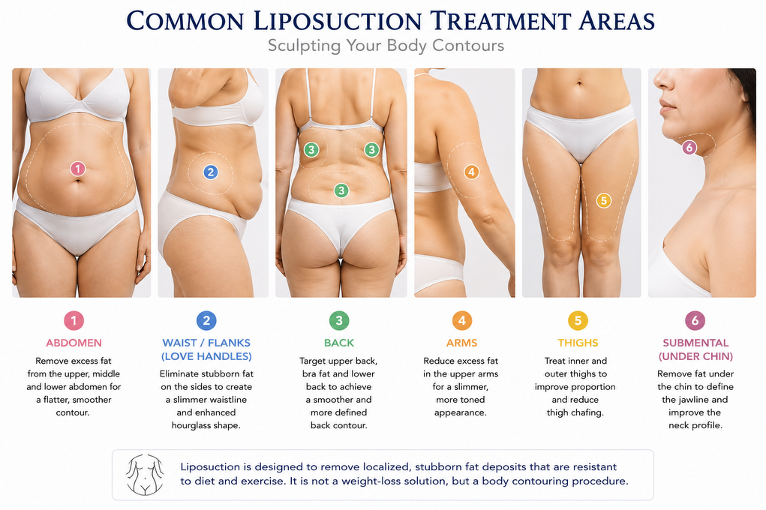
It is important to understand that liposuction is not intended to treat obesity. Instead, it is best suited for individuals whose body weight is relatively stable but who have localized fat deposits that affect body shape. When performed with appropriate patient selection, careful surgical planning, and modern operative techniques, liposuction can produce long-lasting, natural-looking body contours.
One of the fundamental principles of aesthetic body contouring is preserving harmony. Excessive fat removal may create contour irregularities, depressions, or imbalance between different anatomical regions. For this reason, successful liposuction requires not only technical precision but also an artistic understanding of body proportions to achieve smooth, natural, and aesthetically pleasing results.
Individualized Surgical Planning and Treatment Areas
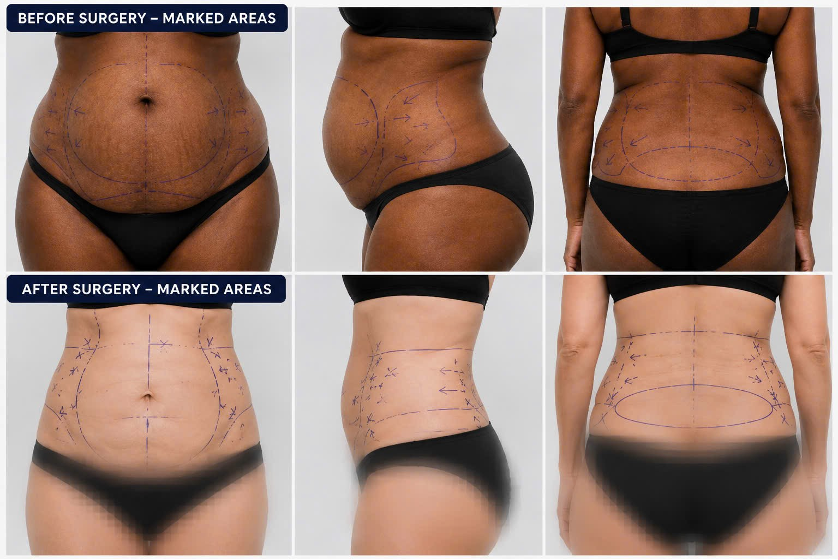
Every body is unique, and successful liposuction begins with an individualized treatment plan rather than a standardized approach. During the preoperative consultation, the surgeon evaluates body proportions, fat distribution, skin quality, tissue elasticity, and the relationship between different anatomical regions. The objective is not simply to remove fat, but to create balanced, harmonious body contours.
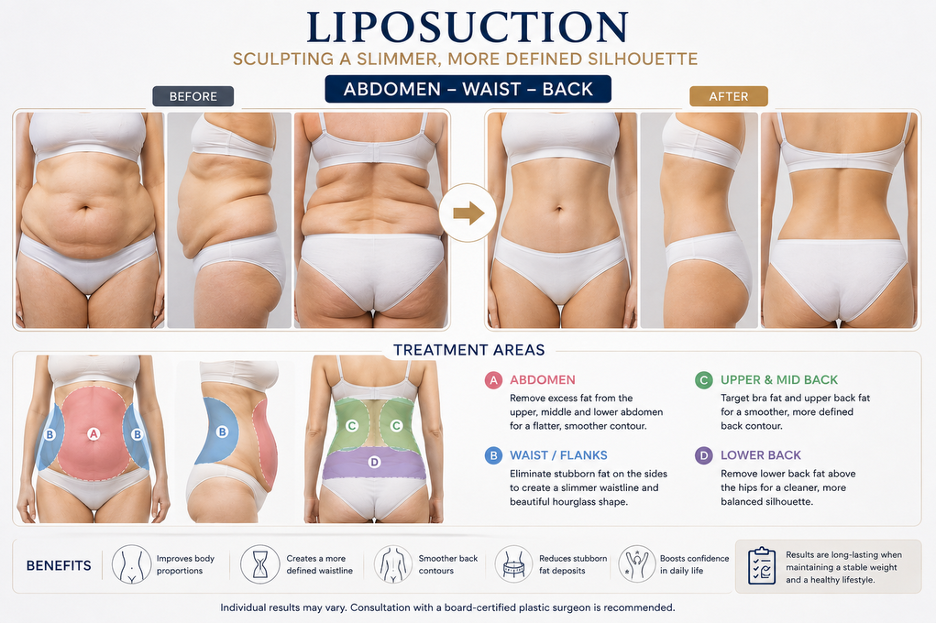
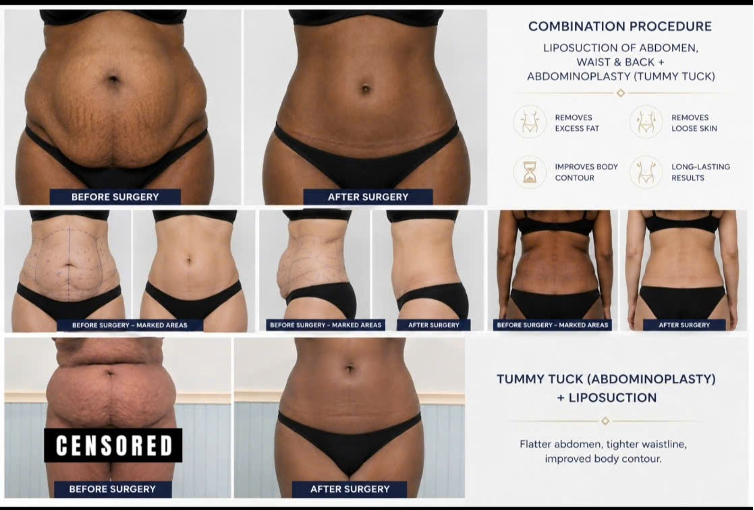
The abdomen and waist are among the most frequently treated areas. Removing localized fat from these regions can enhance the waistline and improve the natural silhouette. In many patients, liposuction of the back is performed simultaneously to create a smooth transition between the waist and posterior body contour.
For the upper arms, the goal is refinement rather than excessive reduction. Careful fat removal can create a slimmer appearance while preserving natural contours. Similarly, thigh liposuction may reduce inner thigh fullness, improve comfort during walking, and produce a smoother contour extending from the hips to the knees.
Submental liposuction is another commonly performed procedure. In appropriately selected patients, removing excess fat beneath the chin can improve jawline definition and enhance the cervicomental angle. However, the final outcome also depends on skin elasticity and individual anatomy.
In some patients, liposuction alone may not provide the desired result. Significant skin laxity following pregnancy, major weight loss, or aging may require additional procedures such as abdominoplasty, arm lift, or thigh lift. Conversely, harvested fat may be processed and transferred to other areas, including the buttocks or face, when volume enhancement is indicated.
Rather than focusing solely on the area with the greatest fat accumulation, modern body contouring considers the body as a whole. This comprehensive approach helps achieve balanced proportions, natural contours, and results that complement each patient’s unique anatomy.
Recovery, Long-Term Results, and Frequently Asked Questions
Recovery following liposuction varies depending on the treatment areas, the volume of fat removed, the patient’s overall health, and individual healing characteristics. Most patients are able to resume light daily activities within a few days and gradually return to their normal routine under the guidance of their surgeon.
During the first 24 to 48 hours, mild discomfort, swelling, bruising, and temporary drainage from the small incision sites are common. These are expected aspects of the healing process and are typically well managed with prescribed medication.
Compression garments play a vital role in recovery by helping reduce swelling, supporting soft tissue adaptation, and promoting smoother body contours. Patients are also encouraged to begin gentle walking early to improve circulation and reduce the risk of postoperative complications.
Visible improvement usually becomes more noticeable after the first month, while the final body contour continues to refine over the following months as swelling resolves completely.
The fat cells removed during liposuction do not regenerate. However, maintaining a stable body weight through healthy eating habits and regular physical activity remains essential, as the remaining fat cells can still enlarge if significant weight gain occurs.
Like any surgical procedure, liposuction carries potential risks, including bleeding, infection, prolonged swelling, seroma, contour irregularities, temporary sensory changes, and, in rare cases, fat embolism or deep vein thrombosis. Careful patient selection, meticulous surgical technique, and proper postoperative care help minimize these risks.
Frequently Asked Questions
Does liposuction help with weight loss?
No. Liposuction is a body contouring procedure designed to reshape specific areas of localized fat rather than treat obesity.
When can I return to work?
Most patients are able to return to office-based work within 5–10 days, depending on the extent of surgery and their individual recovery.
Will liposuction leave visible scars?
The incisions used for liposuction are typically very small and strategically placed in inconspicuous locations, making scars minimally noticeable after healing.
Will my skin become loose after liposuction?
Skin retraction depends on age, skin elasticity, and the amount of fat removed. Patients with significant skin laxity may benefit from combining liposuction with body lift procedures.
Can fat return after liposuction?
The removed fat cells do not grow back. However, maintaining a stable weight is important because the remaining fat cells can enlarge if significant weight gain occurs.