

I – Understanding Abdominal Skin Laxity
Many people believe that a protruding abdomen after pregnancy or weight loss is caused primarily by excess fat. In reality, not every enlarged abdomen can be improved with liposuction alone. In many patients, the underlying problem is excess skin, weakened abdominal muscles, and reduced skin elasticity. In these situations, abdominoplasty, commonly known as a tummy tuck, is often a more appropriate treatment for restoring abdominal contour.
Pregnancy is one of the most common causes of abdominal wall laxity. As the uterus expands, the abdominal wall stretches significantly over several months. After childbirth, the skin and soft tissues do not always return to their original condition. In addition, the paired rectus abdominis muscles may separate, a condition known as rectus diastasis, resulting in a persistent abdominal bulge even when only a small amount of fat remains.
Another common group of patients includes those who have experienced major weight loss through lifestyle modification or bariatric surgery. Although body fat decreases substantially, skin that has been stretched for years often cannot contract completely. As a result, excess skin folds and abdominal sagging may remain. Besides affecting appearance, severe skin laxity can interfere with physical activity, personal hygiene, and overall comfort.
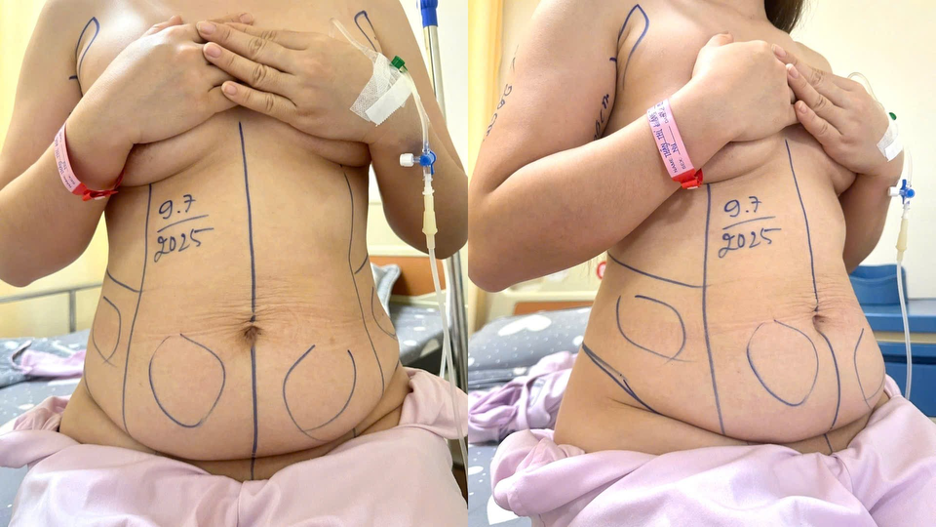
Natural aging also contributes to abdominal skin laxity. As collagen and elastin gradually decline over time, the skin loses its ability to retract efficiently. Consequently, some individuals develop loose abdominal skin even without pregnancy or significant weight loss.
One of the most important concepts is distinguishing excess fat from excess skin. Liposuction removes unwanted fat deposits but cannot eliminate redundant skin that has permanently lost its elasticity. Performing liposuction alone in patients with severe skin laxity may actually make loose skin more noticeable. Therefore, identifying the primary cause of abdominal contour deformity is essential when selecting the most appropriate surgical procedure.
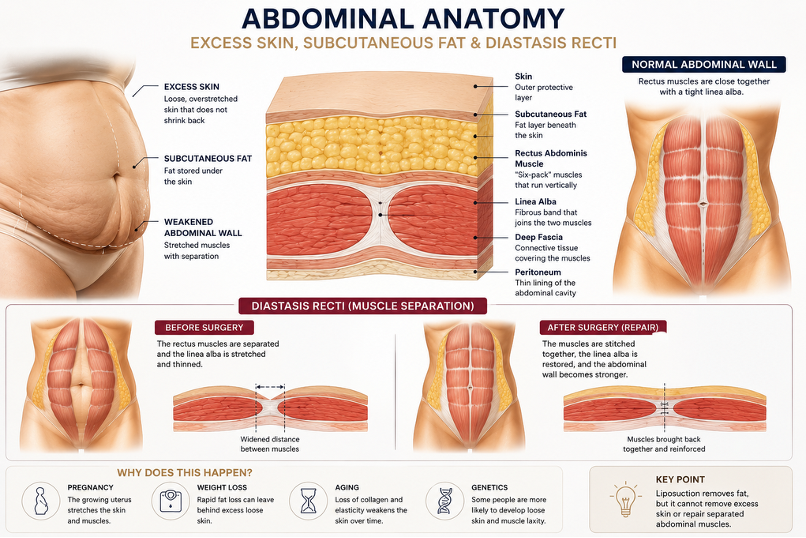
The decision between liposuction and abdominoplasty depends not only on the amount of fat but also on skin quality, abdominal wall laxity, and muscle integrity. In many cases, both procedures are combined to remove excess fat while simultaneously excising redundant skin and restoring a firmer abdominal contour.
Before recommending surgery, the surgeon performs a comprehensive evaluation of fat distribution, skin elasticity, rectus muscle separation, umbilical position, and overall body proportions. This individualized assessment allows a treatment plan to be tailored to each patient’s anatomy rather than applying a single technique to every case.
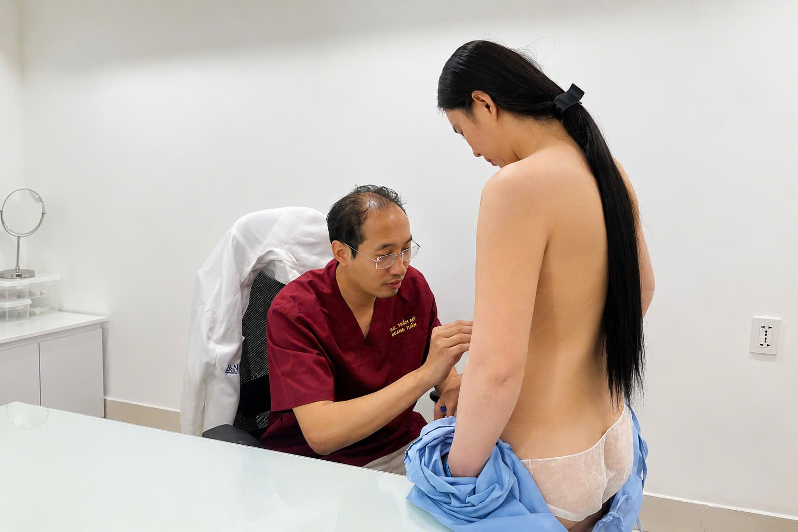
The primary goal of abdominoplasty is not simply to create a smaller abdomen. Instead, it restores the abdominal wall by removing excess skin, repairing weakened muscles when necessary, and improving overall body proportions. When appropriately indicated and carefully planned, abdominoplasty can produce a flatter abdomen, a more defined waistline, and long-lasting improvements in both appearance and confidence.
II – Surgical Techniques and Operative Planning
Not every patient with loose abdominal skin requires the same surgical technique. Following a comprehensive evaluation of skin quality, fat distribution, muscle separation, and the patient’s aesthetic goals, the surgeon develops an individualized treatment plan designed to restore both function and body contour.
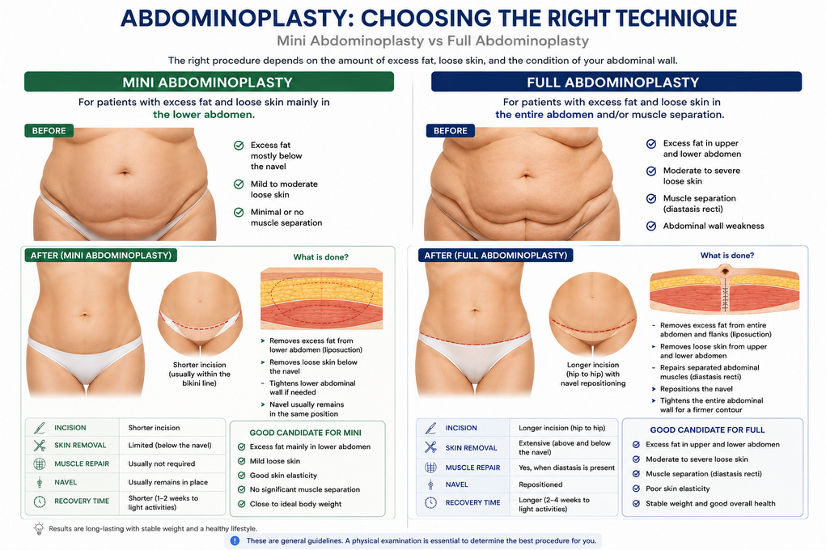
The two most commonly performed procedures are Mini Abdominoplasty and Full Abdominoplasty. Choosing between these techniques depends on the amount of excess skin, the condition of the abdominal wall, and whether muscle repair is required.
Mini Abdominoplasty is generally recommended for patients with mild skin laxity confined to the lower abdomen below the umbilicus. Because the amount of excess skin is limited, the incision is typically shorter and the recovery period may be somewhat faster in carefully selected patients.
By contrast, Full Abdominoplasty is indicated for patients with more extensive abdominal skin laxity, significant rectus muscle separation, or contour deformities affecting the entire abdominal wall. During the procedure, excess skin is removed, the abdominal wall is tightened, and the remaining tissues are repositioned to restore a firmer and more balanced contour.
One of the defining components of modern abdominoplasty is rectus muscle repair when rectus diastasis is present.
Pregnancy, significant weight gain, and prolonged stretching of the abdominal wall may cause the paired rectus muscles to separate along the midline. This separation weakens the abdominal wall, contributes to persistent abdominal protrusion, and may reduce core support. During surgery, the surgeon carefully approximates the muscles using specialized suturing techniques to restore abdominal wall integrity.
It is important to understand that muscle repair is not performed to increase athletic performance or muscle strength. Instead, it re-establishes the normal anatomy of the abdominal wall, helping create a flatter abdomen and improved waist definition in appropriately selected patients.
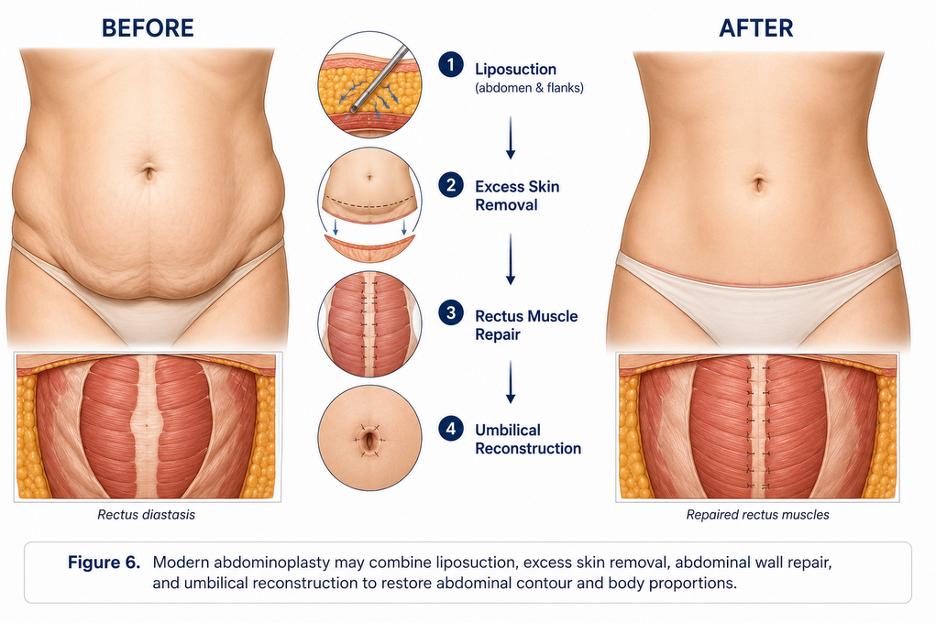
In many patients, liposuction is performed together with abdominoplasty to enhance contouring of the waist, flanks, and lower back. While abdominoplasty removes excess skin and tightens the abdominal wall, liposuction addresses localized fat deposits that remain resistant to diet and exercise.
Rather than replacing one another, these procedures often complement each other. Careful surgical planning allows the surgeon to remove excess fat while preserving adequate blood supply to the abdominal flap, an important factor in promoting safe healing and optimal long-term results.
Another important step in Full Abdominoplasty is umbilical reconstruction. Because the abdominal skin is repositioned after excess tissue is removed, the navel is carefully brought through a new opening in the skin and reconstructed in a natural anatomical position. The objective is to create an umbilicus that appears proportionate, symmetrical, and consistent with the surrounding abdominal contour.
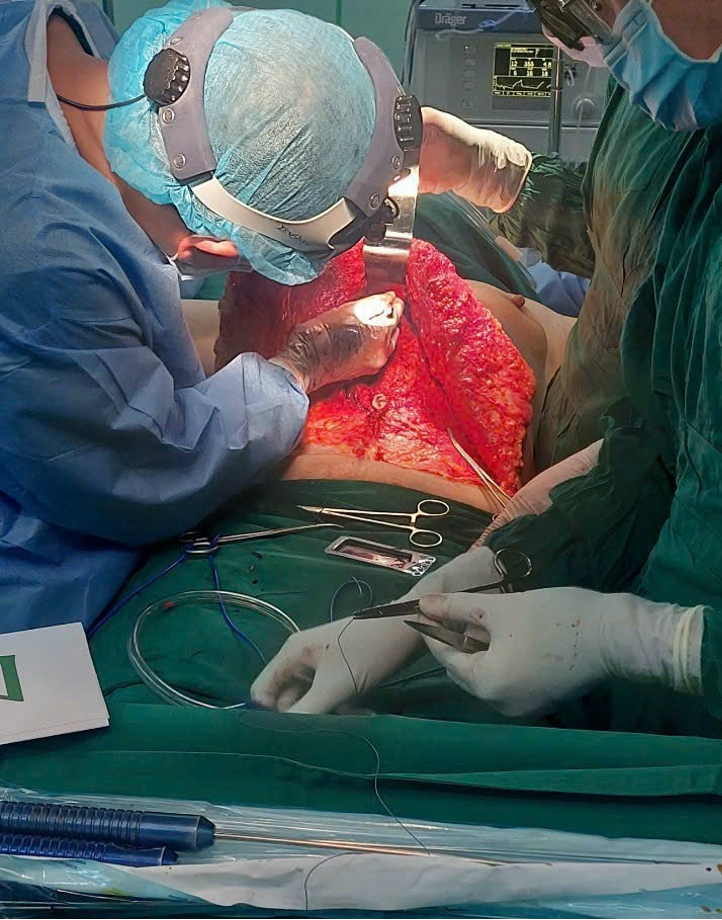
The operation is performed in a fully equipped sterile operating room under general anesthesia with continuous physiological monitoring. Throughout the procedure, careful attention is given to tissue handling, preservation of blood supply, and layered wound closure to promote optimal healing and minimize postoperative complications.
Although the fundamental principles of abdominoplasty remain consistent, every patient presents with unique anatomical characteristics and personal goals. For this reason, individualized surgical planning remains one of the most important factors in achieving safe, natural-looking, and long-lasting results.
III – Recovery, Long-Term Results, and Frequently Asked Questions
Recovery after abdominoplasty generally requires more time than liposuction alone because the procedure involves removal of excess skin, restoration of the abdominal wall, and, when indicated, repair of separated abdominal muscles. Although the recovery timeline varies from patient to patient, following the surgeon’s postoperative instructions is essential for achieving stable results and minimizing complications.
During the first few days after surgery, patients commonly experience a feeling of tightness across the lower abdomen, particularly when standing upright or changing position. This is a normal response following abdominal wall reconstruction and gradually improves as healing progresses. Gentle walking is encouraged shortly after surgery to promote circulation and reduce the risk of deep vein thrombosis.
Compression garments play an important role during recovery by reducing swelling, supporting the repaired abdominal wall, and helping soft tissues adapt to their new contour. In selected patients, temporary surgical drains may also be placed to remove excess fluid during the early healing period. These drains are usually removed once drainage decreases to an appropriate level.
Most patients notice progressive improvement in abdominal contour over the first several weeks. However, residual swelling continues to resolve gradually, and the final result typically becomes more apparent over the following months. During this period, scar maturation also continues, with surgical scars generally becoming flatter and less noticeable over time.
Abdominoplasty can provide long-lasting results when patients maintain a stable body weight and a healthy lifestyle. The excess skin removed during surgery does not return. However, significant weight fluctuations or future pregnancies may alter the appearance of the abdominal wall and affect the long-term outcome.
Beyond improving abdominal appearance, many patients report increased comfort during daily activities, improved clothing fit, and greater self-confidence. In patients with rectus diastasis, restoration of the abdominal wall may also improve core stability and overall body support.
Like any surgical procedure, abdominoplasty carries potential risks, although careful patient selection, meticulous surgical technique, and structured postoperative care significantly reduce their occurrence.
Potential complications may include:
- Seroma (fluid collection)
- Hematoma or postoperative bleeding
- Infection
- Delayed wound healing
- Hypertrophic or widened scars
- Partial skin edge necrosis (uncommon)
- Deep vein thrombosis or pulmonary embolism (rare but potentially serious)
Routine follow-up visits allow early identification and management of postoperative concerns, contributing to a safer recovery.
Frequently Asked Questions
When can I stand upright after surgery?
Most patients begin walking on the day of surgery or the following day. Standing completely upright may take several days or longer depending on the degree of abdominal wall tightening.
When can I return to exercise?
Light walking is encouraged early during recovery. More strenuous activities, heavy lifting, and abdominal strengthening exercises should only resume after clearance from the surgeon.
Will the scar be visible?
The incision is typically positioned low on the abdomen so it can usually be concealed beneath underwear or swimwear. Although every scar matures differently, most gradually become softer and less noticeable over time.
Can liposuction be combined with abdominoplasty?
Yes. Liposuction is frequently combined with abdominoplasty to improve contouring of the abdomen, waist, and flanks. The decision depends on the patient’s anatomy and the overall surgical plan.
Can I become pregnant after abdominoplasty?
Pregnancy remains possible after surgery. However, patients planning future pregnancies should discuss this with their surgeon, as pregnancy may stretch the abdominal wall again and influence long-term results.
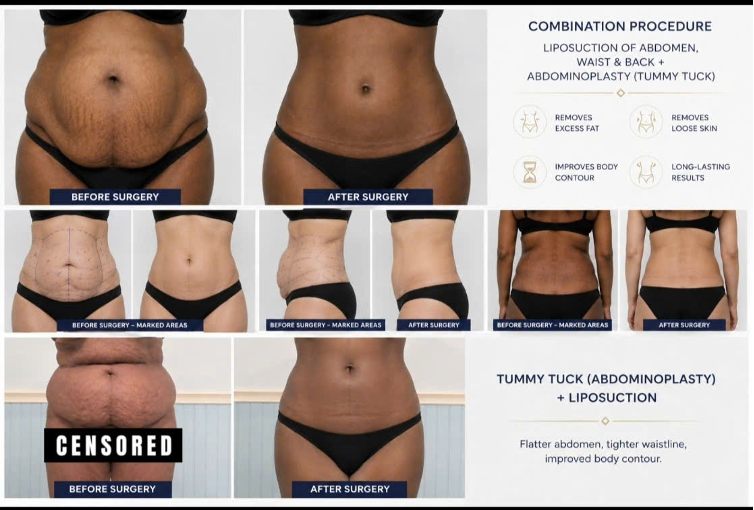
Abdominoplasty is more than a procedure to remove excess skin. It is a comprehensive abdominal wall reconstruction designed to restore body proportions by addressing skin laxity, repairing weakened abdominal muscles when indicated, and improving overall contour.
Every patient presents with unique anatomical characteristics, lifestyle factors, and aesthetic goals. For this reason, treatment planning should always be individualized following a thorough clinical assessment. With appropriate patient selection, meticulous surgical technique, and comprehensive postoperative care, abdominoplasty can provide natural-looking, durable results while improving both physical comfort and confidence.